Move to 2D Barcodes
Digital transformation will unlock limitless possibilities for businesses, people and the planet.
As we celebrate 50 years since the introduction of the first barcode, the world of product identification is evolving. Enter two-dimensional (2D) barcodes—a game-changer that goes beyond the familiar “beep” at the checkout.
Industries across the globe are preparing to transition from traditional one-dimensional (1D) barcodes, like the EAN/UPC, to more advanced two-dimensional (2D) barcodes. Unlike their 1D predecessors, 2D barcodes can store significantly more data, providing a wealth of information at the scan of a code. This evolution is set to commence in 2027, a global initiative to transition to 2D barcodes for point-of-sale (POS) and point-of-care (POC) applications. This transition is not just a technological upgrade; it’s a monumental change that promises to enhance data accessibility, transparency, and efficiency across various sectors.
These new 2D barcodes will be used in manufacturing, warehousing, logistics and healthcare. They connect businesspeople to the information they need for inventory management, traceability programmes, sustainability initiatives, consumer engagement actions and more. While One-dimensional barcodes will not completely disappear, 1D, QR and DataMatrix codes will coexist in retail.
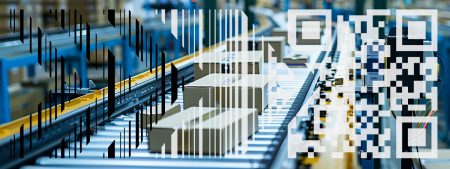
The Dawn of 2D Barcodes: Why the Change?
The EAN/UPC barcode has been the cornerstone of product identification and price lookup for decades. However, as consumer demands and regulatory requirements evolve, the limitations of these 1D barcodes have become increasingly apparent. Today’s stakeholders (brand owners, regulators, distributors, retailers, or consumers) require more comprehensive product information delivered seamlessly and securely. Brand owners can tap even more fully into their power and flexibility by encoding them with a GS1 Digital Link; in the same way, a URL points to a website, a GS1 Digital Link enables connections to all types of business-to-business and business-to-consumer information.
The Benefits of 2D Barcodes
2D barcodes offer a myriad of advantages that address the pressing needs of today’s supply chains and consumer markets:
- Improved Inventory Management: With more data, businesses can track products more accurately and efficiently.
- Enhanced Recall Readiness: Detailed product information ensures swift and precise action during a recall.
- Greater Sustainability and Ethical Sourcing: Consumers can access information about a product’s environmental impact and ethical sourcing, fostering informed purchasing decisions.
- Better Product Authentication: The increased data capacity aids in verifying the authenticity of products protecting brands and consumers from counterfeits.
Greater Brand Trust: Transparency in product information builds consumer trust and loyalty.
Preparing for the Future
The shift to 2D barcodes represents a significant step forward in meeting the demands of modern supply chains and consumer expectations. For businesses, this means updating POS systems and ensuring their QR code implementations are secure and trustworthy.
Using laser technology to code and mark your products with 2D codes means lower operating costs than inkjet technology; as there are no consumables, businesses can confidently embrace the future of barcoding, ensuring that they are ready for the increased data demands and security challenges that come with it.
As we move toward 2027, let’s work together to build a safer, more transparent, and efficient digital world. With our expertise, your transition to 2D barcodes will be seamless, empowering you to meet the evolving needs of your customers and stakeholders.