Could Better Coding, Marking, and Traceability Help Eliminate Your Biggest Pharmaceutical QC Challenges?
South Africa’s pharmaceutical manufacturing sector plays a critical role in supporting healthcare across the country and the broader African continent. Whether producing prescription medicines, over-the-counter products, vaccines, or contract-manufactured pharmaceuticals for export markets, manufacturers face increasing pressure to maintain product quality, regulatory compliance, and supply chain integrity.
At the same time, pharmaceutical facilities are navigating stricter regulatory oversight from the South African Health Products Regulatory Authority (SAHPRA), growing demands for serialisation and traceability, and rising expectations around patient safety.
The challenge is clear: how can manufacturers reduce quality-control failures before they lead to recalls, compliance issues, or risks to patients?
The answer increasingly lies in smarter coding, marking, serialisation, and traceability systems.
The Cost of Quality Failures in Pharmaceutical Manufacturing
Research across multiple FDA inspection cycles has shown that 85.1% of drug recalls originate from quality failures, while packaging issues account for approximately 35% of reported quality defects in finished pharmaceuticals.
Although these statistics are global, South African manufacturers face many of the same quality challenges identified by regulators worldwide:
- Documentation and data integrity failures
- Labelling and packaging errors
- Batch contamination and cross-contamination
- Serialisation and traceability gaps
- Weak CAPA implementation
- Out-of-specification (OOS) investigations
- Product identification errors
For manufacturers supplying both local and export markets, even a small quality issue can result in significant financial and reputational damage.
1. Documentation and Data Integrity Failures
One of the most common findings during regulatory inspections involves incomplete or inaccurate documentation.
Typical issues include:
- Incomplete batch records
- Manual transcription errors
- Missing audit trails
- Shared user access credentials
- Non-compliant record retention
- Delayed documentation updates
In South Africa, manufacturers must demonstrate compliance with SAHPRA’s Good Manufacturing Practice (GMP) expectations and maintain complete product histories that withstand regulatory review.
How Traceability Helps
Modern traceability platforms digitise production information and automatically record critical manufacturing events.
Benefits include:
- Electronic batch records
- Automated audit trails
- Improved document accuracy
- Reduced manual data capture
- Faster deviation investigations
- Simplified regulatory inspections
By reducing manual intervention, manufacturers strengthen data integrity and improve compliance readiness.
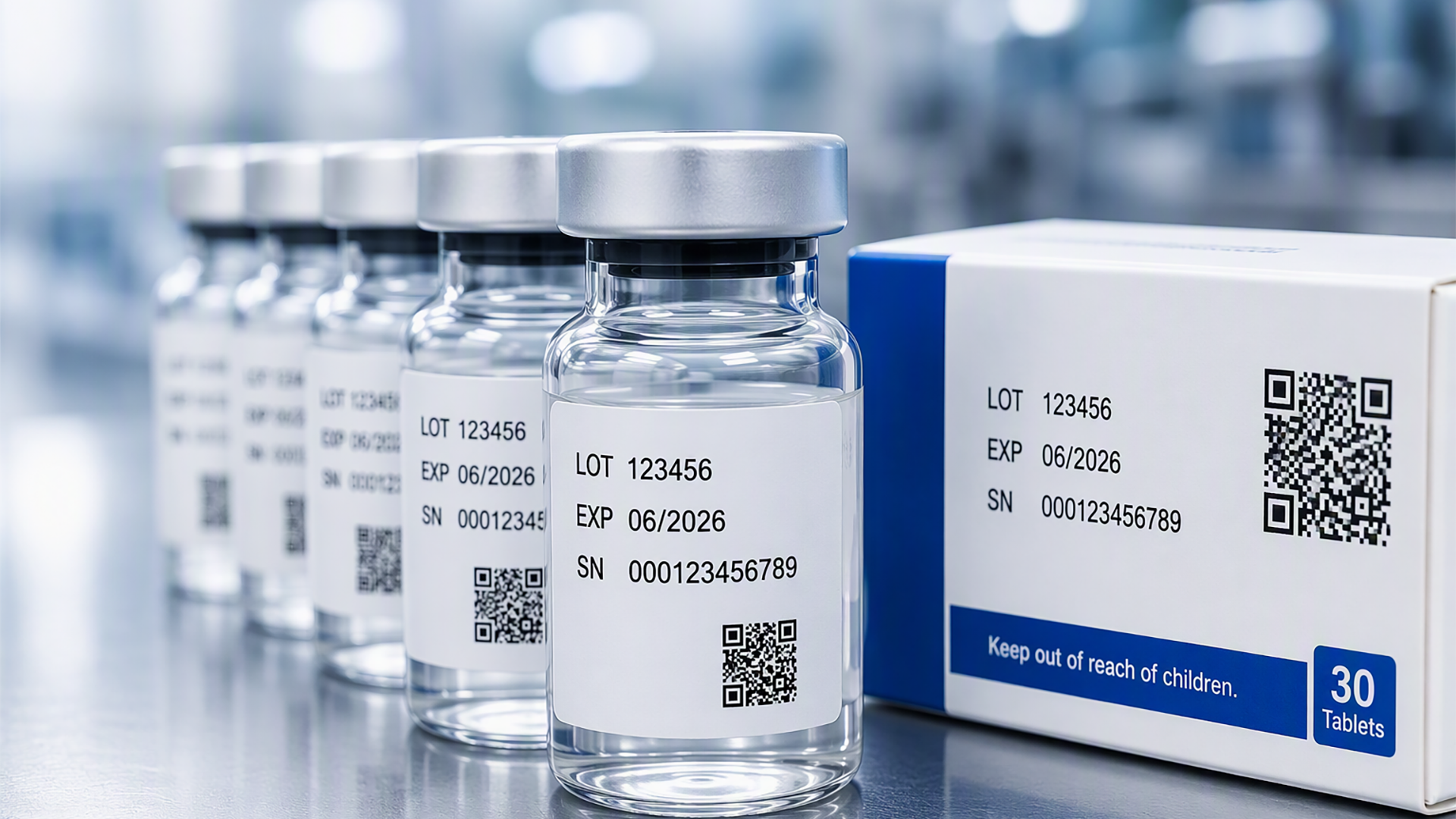
2. Labelling and Packaging Errors
Packaging remains one of the highest-risk areas in pharmaceutical manufacturing.
Common defects include:
- Incorrect batch numbers
- Wrong expiry dates
- Missing product information
- Incorrect label application
- Unreadable barcodes
- Product mix-ups during line changeovers
For manufacturers distributing medicines throughout South Africa and neighbouring countries, labelling errors can have serious consequences for patient safety and regulatory compliance.
Building Quality into the Packaging Process
The most effective approach is to verify every code and label as it is applied.
Integrated coding, marking, and vision inspection systems can:
- Validate batch information in real time
- Verify barcode readability
- Detect incorrect labels
- Automatically reject defective products
- Prevent packaging errors from leaving the line
This reduces dependence on manual inspections while improving overall product quality.
3. Contamination and Cross-Contamination Risks
Cross-contamination remains a significant concern in facilities manufacturing multiple products or dosage forms.
Potential causes include:
- Inadequate cleaning procedures
- Shared equipment
- Environmental control failures
- Material handling errors
- Poor line clearance practices
These events often lead to extensive investigations and may affect multiple batches.
Why Traceability Matters
When contamination occurs, speed matters.
End-to-end traceability enables manufacturers to:
- Identify impacted batches quickly
- Isolate affected materials
- Trace production history
- Support root cause investigations
- Minimise recall scope
Rather than searching through paper-based systems, quality teams gain immediate access to production records and historical data.
4. Serialisation and Supply Chain Traceability
South Africa’s pharmaceutical industry continues to experience increasing demand for greater supply chain transparency and protection against counterfeit products.
Without proper serialisation controls, manufacturers face risks such as:
- Duplicate product identities
- Counterfeit infiltration
- Product diversion
- Difficulty tracking recalls
- Regulatory compliance challenges
Catching Errors Before Products Leave the Plant
Serialisation failures often originate from:
- Poor print quality
- Incorrect code generation
- Unverified barcodes
- Aggregation errors
- Data transfer failures
Real-time barcode verification and serialisation management systems enable manufacturers to detect these issues immediately rather than discovering them later in the distribution chain.
For pharmaceutical manufacturers exporting to regulated markets, traceability has become increasingly important for maintaining market access and customer confidence.
5. Out-of-Specification Results and CAPA Challenges
One of the biggest quality risks is not necessarily the OOS result itself, but how it is investigated.
Weak investigations often involve:
- Inadequate root cause analysis
- Poor documentation
- Unsupported retesting
- Generic CAPAs
- Lack of effectiveness monitoring
These shortcomings can create recurring quality issues that persist from batch to batch.
Better Information Leads to Better CAPAs
Integrated traceability and quality systems provide immediate access to:
- Production records
- Inspection data
- Packaging verification results
- Equipment history
- Audit trail information
This allows quality teams to conduct thorough investigations and implement CAPAs that address the true root cause rather than treating symptoms.
6. Why South African Manufacturers Are Moving Toward Real-Time Verification
Traditional quality systems often rely on:
- Manual inspections
- End-of-batch reviews
- Paper records
- Reactive investigations
The challenge with this approach is that defects are often discovered only after production has been completed.
Modern pharmaceutical operations are increasingly adopting:
- Automated coding systems
- Machine vision inspection
- Real-time verification
- Electronic data capture
- End-to-end traceability platforms
This shift allows manufacturers to identify and correct issues immediately, reducing waste, recalls, and compliance risks.
Prevention Costs Less Than Remediation
A barcode error caught during packaging takes seconds to correct.
The same error discovered after distribution could trigger:
- Product recalls
- Investigation costs
- Repackaging expenses
- Regulatory scrutiny
- Customer dissatisfaction
The economics are simple: preventing errors is significantly less expensive than correcting them later.
Supporting Regulatory Readiness in South Africa
Whether preparing for a SAHPRA inspection, supplying the public healthcare sector, or exporting to international markets, pharmaceutical manufacturers need systems that can demonstrate compliance at any time.
Audit-ready traceability provides:
- Complete product histories
- Secure audit trails
- Batch-level visibility
- Faster document retrieval
- Improved recall management
- Stronger compliance reporting
Instead of preparing for inspections as a special project, manufacturers can maintain ongoing inspection readiness as part of normal operations.
How TracePack Supports South African Pharmaceutical Manufacturers
As a division of Mitas Corporation, TracePack helps pharmaceutical manufacturers across South Africa strengthen quality control through advanced:
- Coding and marking solutions
- Machine vision inspection systems
- Barcode verification technology
- Serialisation platforms
- Production traceability systems
- Integrated quality data capture
Our solutions help manufacturers:
- Improve coding accuracy
- Reduce labelling and packaging errors
- Strengthen traceability and compliance
- Simplify audits and inspections
- Support product serialisation initiatives
- Reduce manual data handling
- Improve quality control performance
- Minimise recall risk
TracePack helps pharmaceutical manufacturers build smarter production environments that support both regulatory compliance and operational excellence.
Building a Pharmaceutical Quality System That Performs Under Scrutiny
The quality challenges facing South African pharmaceutical manufacturers are not unique. Documentation issues, packaging defects, contamination events, serialisation failures, and weak investigations occur throughout the global industry.
What sets leading manufacturers apart is their ability to detect problems early, automatically verify products, maintain accurate records, and trace every product throughout its lifecycle.
By investing in advanced coding, marking, serialisation, and traceability technologies, pharmaceutical manufacturers can strengthen patient safety, improve compliance, reduce recalls, and build confidence throughout the supply chain.
Could better coding, marking, and traceability help eliminate your biggest pharmaceutical QC challenges?
Contact TracePack today to discover how our pharmaceutical coding, serialisation, machine vision, and traceability solutions can help your South African manufacturing operation become more compliant, efficient, and inspection-ready.